Too many people across Wales still face barriers to accessing mental health support when they need it most. Long waiting times, complex referral pathways and fragmented services can leave people struggling to find help until their needs escalate to crisis.
These challenges were central to the event organised by the Wales Alliance for Mental Health (WAMH), on 14 October 2026 at the Norwegian Church Arts Centre in Cardiff Bay, bringing together people with lived experience, political representatives, third sector organisations and health colleagues to discuss the importance of open-access mental health support and how it can be delivered across the country.
For Adferiad, the event provided an opportunity to highlight why timely, accessible and person-centred support must be a priority for the new Welsh Government.
Open-access services allow people to seek mental health support directly, without necessarily needing a GP referral or navigating lengthy assessment processes before receiving help. Same-day support, where possible, means people can access assistance when they need it, rather than waiting for their circumstances to deteriorate.
Although Wales has a strong policy foundation for prevention and early intervention, there remains a gap between these ambitions and people’s experiences. Being redirected across services, excluded by eligibility criteria or left waiting can have serious consequences.
Open access is about more than reducing waiting times. It means creating a system the responds to people as individuals and connects them with appropriate support without delay, and unnecessary barriers.
As a member of the Wales Alliance for Mental Health, we were delighted to be involved in this seminar, exploring how the Third Sector is already delivering innovative, responsive services that respond to a person’s needs, however and wherever they present. The event opened with a welcome from Mind Cymru’s Nia Sinclair, who reminded us of the importance of collaboration and co-operation in delivering for those who need support. Platfform’s CEO, Ewan Hilton, introduced WAMH and outlined the background to open-access mental health support, setting the context for the day’s discussions.
A key part of the programme was a contribution from Ahmed Assisi, supported by Tony Hendrickson from Adferiad’s Diverse Cymru, bringing lived experience into the conversation. Tony set out the work being done to create an anti-racist mental health
system in Wales, while Ahmed generously shared his story of arriving in Cardiff from Gaza, his interactions with services and the importance of offering support whenever it is needed. Hearing directly from people who have experienced mental health services is essential to understanding the barriers they encounter and ensuring future policy reflects what people actually need.
The event also featured a keynote speech from Delyth Jewel MS, Deputy Minister for Social Care, Mental Health and Women’s Health, who set out her vision for a ‘no wrong door’ approach to support and the Welsh Government’s commitment to same-day open access services. She also emphasised the need for effective implementation across all government departments, recognising the complex nature of mental ill health and how life, or recovery, is rarely straightforward.
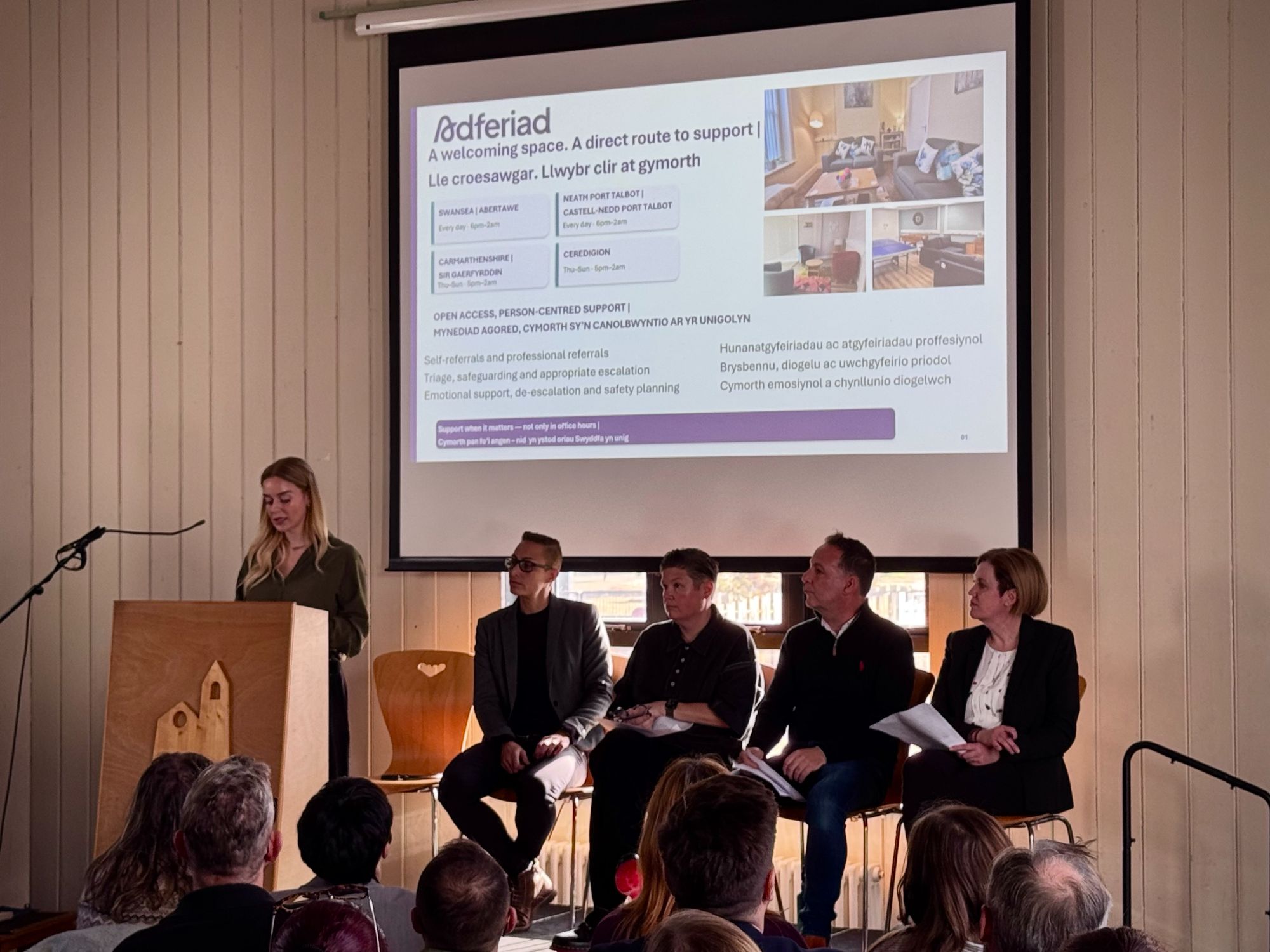
This was followed by a presentation on “Making Open Access Work: The Third Sector’s Role in Delivering Mental Health Support”, where representatives from WAMH member organisations – Adferiad, Platfform, Mental Health Matters, BEAT, and Mind Cymru – shared perspectives on the third sector’s role in delivering accessible support. Adferiad’s Head of Crisis Intervention and Involvement, Chloe Farnham, gave an overview of our Sanctuary Services and how we had evolved its delivery from professional referral only to open access, in response to feedback from those we support. She highlighted the importance of not simply scraping something if it doesn’t initially work and starting afresh – instead, she urged people to look again, listen to the voices of lived experience, and make the necessary changes to meet their needs.
The programme concluded with a panel discussion and questions from attendees, chaired by Donna Chaves, Adferiad’s Director of Public Affairs and Communications, creating space to explore the issues raised and how organisations can work together to improve access.
The event showcased the significance of bringing lived experience, policy and frontline expertise together when considering the future of mental health support in Wales.
The challenge now is to turn commitments to prevention and early intervention into services people can access in practice. This means reducing unnecessary barriers, strengthening collaboration between statutory and third sector providers, and ensuring services have the resources to respond when people need support.
Individuals should not have to reach crisis point before they can access help. Adferiad will continue working with our WAMH partners, policymakers and cross sector organisations to make the case for accessible, joined-up and sustainable mental health support across Wales.
See similar stories

What should the Seventh Senedd prioritise on Health and Social Care?