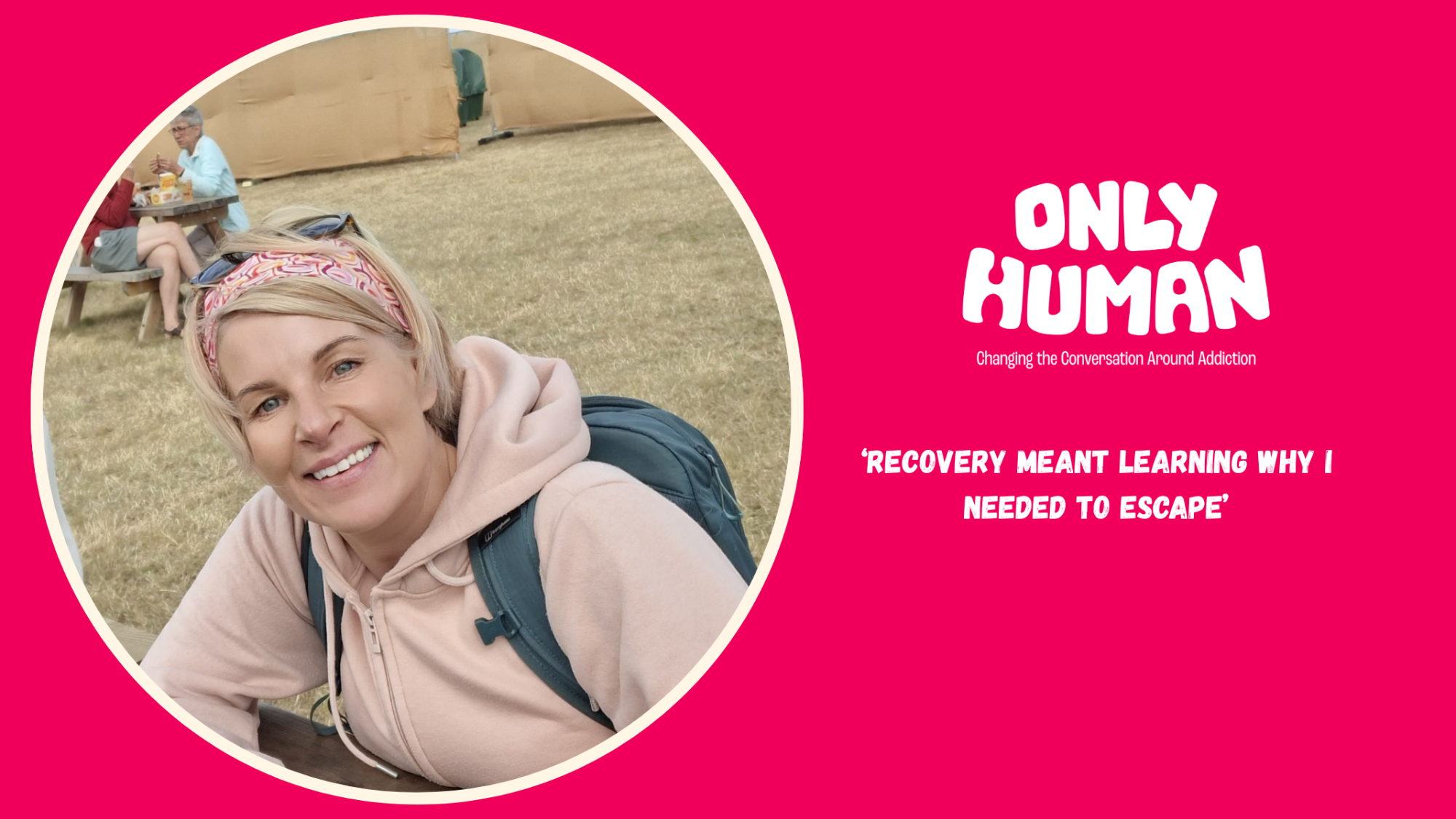
'Recovery meant learning why I needed to escape' - Only Human Champion Nicola’s story of recovery
To mark Recovery Month this September, Only Human Champion Nicola Sian Rees shares her experience of alcohol dependency, neurodivergence and recovery, and how learning to understand herself has helped her build a life she no longer wants to escape from.
For Nicola, recovery has come to mean much more than giving up alcohol.
It has meant understanding herself, looking honestly at why alcohol became such an important part of her life and making changes that went far beyond simply stopping drinking.
Today, Nicola is an Only Human Champion and founder of Nourish Not Numb, where she shares her experiences of addiction, neurodivergence, recovery and wellbeing in the hope that other people might recognise themselves a little sooner than she did.
But for many years, Nicola didn't fully understand what was happening beneath the surface.
In many ways, she looked like someone who was doing well. She was driven, sociable, successful and used to pushing through difficult things. She had a career, raised her children and became very good at appearing capable.
What she didn't understand at the time was how much of that ability to keep going was also masking.
Nicola had also experienced significant loss from a young age, including losing her mum suddenly while she was pregnant. Grief, motherhood and the pressure of continuing with everyday life meant she became accustomed to carrying difficult things while still appearing to function.
After having her son and spending more than a year without drinking, Nicola began noticing difficulties that she would later come to understand in the context of being autistic and having ADHD.
At the time, she didn't understand masking or why situations that seemed manageable for other people could feel completely overwhelming to her.
She remembers getting ready to attend a christening and feeling unable to face it.
"I had a drink just to calm my anxiety and so I could put on a brave face. The message was always: push through."
Alcohol increasingly became a way of doing exactly that, helping Nicola manage anxiety, social situations and feelings she didn't yet understand.
Looking back now, she can see that alcohol wasn't simply about drinking. It had become a way of regulating an internal experience she didn't yet have the language to explain.
Deep down, Nicola knew for some time that her relationship with alcohol had changed. One of the clearest warning signs came when she began hiding bottles because people around her had started noticing how much she was drinking.
"The more people noticed, the better I got at hiding them."
Understanding what was underneath
Nicola had experienced years of difficulties with her mental health, including anxiety, depression, postnatal depression and PMDD.
Receiving an AuDHD diagnosis — recognising both autism and ADHD — would eventually help Nicola make sense of experiences and behaviours she had struggled to understand for years.
It didn't suddenly fix everything, but it changed the way she understood herself.
For the first time, Nicola could look back at some of the things she had spent years criticising herself for and see them differently.
"I spent years thinking there was something wrong with me. I was trying to fix myself without understanding what I was actually trying to fix."
That understanding has become an important part of Nicola's recovery, and she believes greater awareness and recognition of neurodivergence could make a significant difference for people who have spent years struggling without understanding why.
But before reaching that understanding, Nicola reached a crisis point.
While in London, she was experiencing severe alcohol withdrawal and felt unable to stop drinking. She describes reaching the point where she knew she could no longer continue living as she was.
A relative travelled to be with her and, rather than judging her, showed her care and understanding.
For Nicola, that moment created enough safety for her to finally say:
"I need help."
She was able to enter rehabilitation, something she is very aware is not accessible to everybody who needs it.
Rehab gave Nicola the opportunity to safely step away from alcohol, but it also gave her something she desperately needed: time.
"It gives you a pause from life to actually breathe and get some perspective."
For the first time, Nicola began to see addiction differently.
She wasn't simply an "embarrassment" or a "mess". She was someone who was unwell and needed support.
Being surrounded by people who wanted to help rather than judge her also allowed Nicola to begin letting go of some of the shame she had been carrying.
But Nicola is clear that rehabilitation wasn't the end of her recovery.
It was the beginning.
Building a different life
Removing alcohol from her life didn't automatically remove the reasons she had relied upon it.
Nicola knew that if she simply returned to exactly the same life, the same pressures and the same ways of coping, she was likely to struggle again.
Some of the changes that followed were painful, but they were necessary.
"I had to change everything. I had to build a life I didn't want to escape from."
That idea has become central to Nicola's understanding of recovery.
Rather than simply focusing on what she needed to stop doing, she began looking at what she could introduce into her life to support herself physically and emotionally.
As part of that process, Nicola studied functional nutrition and became increasingly interested in how looking after and nourishing herself could form part of the different life she was trying to build.
From there came Nourish Not Numb.
"I learned that nourishing my body properly was better and more beneficial than numbing it."
Nicola wanted to use what she had learned, alongside her own experiences, to help other people feel less alone.
She also had another powerful motivation: her daughter, who is autistic.
Knowing that her daughter may experience some of the same difficulties Nicola herself had spent years trying to understand made her want to turn some of those experiences into something useful.
Rather than her story simply being something painful that happened to her, she wanted it to become something that might help somebody else recognise themselves sooner.
For Nicola, knowledge can be incredibly powerful.
There is always hope
Life today looks very different.
Nicola describes it simply as "much simpler."
She keeps her circle smaller, values peace and no longer feels the same pressure to constantly socialise, keep up with other people or measure success through material things.
That doesn't mean she has stopped being driven.
For much of her life, Nicola believed being productive, achieving and pushing through were simply part of who she was. Now she is beginning to recognise how some of that drive was also connected to masking and trying to prove that she could cope.
Learning to rest and accept a quieter life can still feel uncomfortable.
"I still have this voice in my head telling me I should be doing more, seeing more people, achieving more and being more. I'm learning that rest isn't laziness and that a quieter life doesn't mean I've failed."
Most importantly, Nicola says she has found her core values again.
"I'm a better human being for it all, I think."
Nicola never imagined she would reach a point where she could feel grateful for what recovery has taught her.
That doesn't mean being grateful for addiction, or for the pain it caused her or the people around her. It means recognising what she has learned from surviving it and rebuilding afterwards.
During Recovery Month, Nicola hopes sharing some of her experience might reach someone who currently feels as isolated or desperate as she once did.
Her message is simple:
"There is always hope. No matter where you are, please never forget that."
She urges people not to compare their struggles with somebody else's or convince themselves that they aren't struggling enough to deserve support.
"It takes time, but keep knocking on doors, keep reaching out, keep asking for help. It's not an easy fix and systems need to change, but there are some amazing people working and volunteering in services and you can find them."
Nicola's experience is a reminder that recovery doesn't necessarily mean returning to the life somebody had before addiction.
Sometimes, it means understanding why that life became so difficult in the first place, recognising the ways you had learned to cope and having the opportunity to build something different.
A life you don't need to escape from.
See similar stories
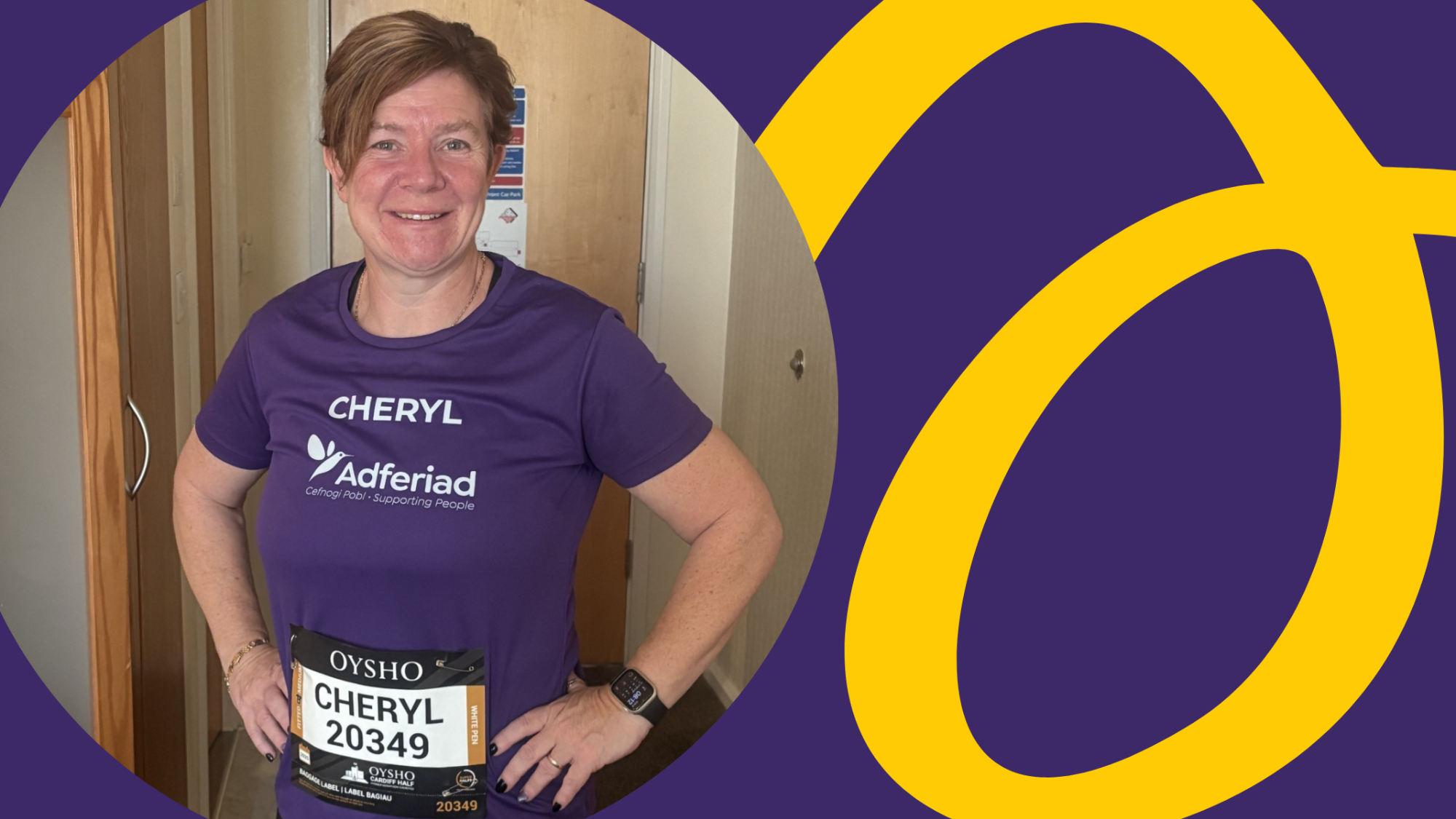
“Every difficult mile has a greater purpose”: Cheryl takes on the London Marathon for Adferiad